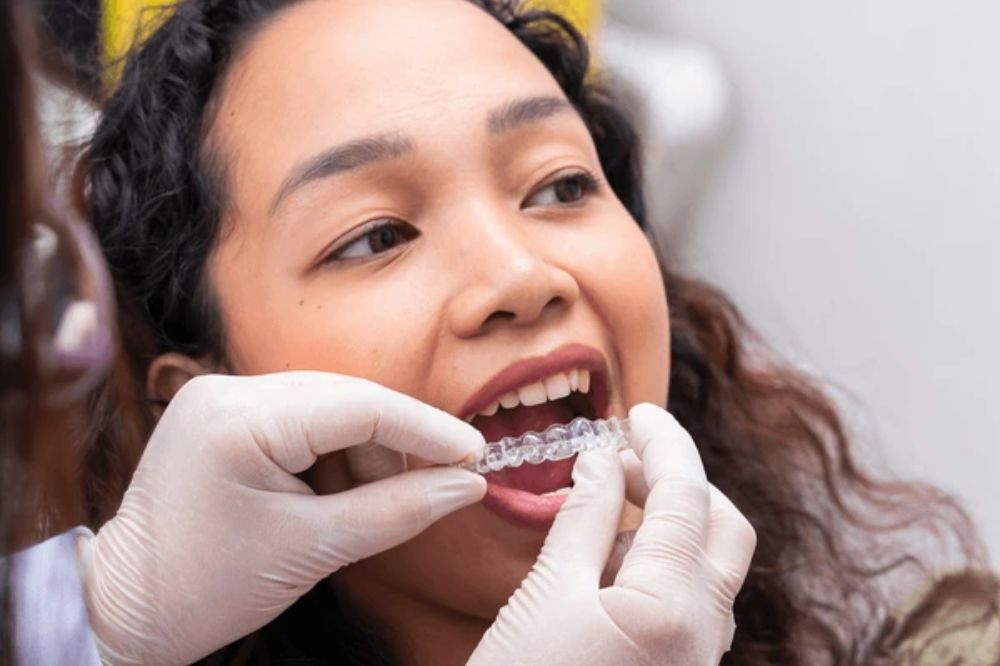
Having crooked teeth can do more than change how your smile looks. It can also cause your teeth to wear down unevenly and lead to jaw pain. A crossbite is a specific problem where your top teeth sit inside your bottom teeth when you close your mouth, instead of slightly outside them. For those interested in Invisalign in Coquitlam, modern dental tools now provide a nearly invisible way to fix these bite issues without needing old-fashioned metal braces.
Fixing a crossbite is very important for the long-term health of your mouth. When your teeth don't line up the right way, the extra pressure can make your gums shrink and even cause bone loss over time. Learning how clear trays work to fix these bite problems helps you choose a treatment that fits your life and keeps your smile healthy.
Defining The Nature Of A Crossbite
A crossbite can involve a single tooth or an entire group of teeth. Dental professionals usually categorize these into two types: posterior and anterior. An anterior crossbite occurs at the front of the mouth, resembling an underbite, while a posterior crossbite affects the molars at the back. Both variations can cause the jaw to shift to one side, leading to permanent changes in facial symmetry if left untreated.
Earlier versions of clear tray therapy were mainly used for simple crowding or gaps. However, recent advancements in 3D modeling and attachment technology have made it possible to tackle more intricate skeletal and dental misalignments.
How Clear Aligners Exert Movement
Many people wonder if a removable plastic tray has enough strength to move heavy molars or adjust a bite. Clear Aligner Treatment works by applying constant, gentle force to specific points on the teeth. To fix a crossbite, a dental provider might use "attachments," which are tiny, tooth-colored bumps bonded to the enamel. These serve as anchors, allowing the trays to grip the teeth more effectively and push them into the correct lateral positions.
By wearing the trays for 22 hours a day, the jaw slowly adapts to a wider or more centred position. Every two weeks, a new set of aligners continues the progress, gradually moving the upper teeth outward until they safely overlap the lower ones.
What Factors Influence Treatment Success?
Research shows that success rates for bite correction remain high when patients follow the prescribed wear schedule strictly. Because these trays are removable, the outcome depends heavily on the user's commitment. Most adults see significant changes within 12 to 18 months, though complex skeletal cases may require a bit more time.
Consulting with a dentist in Coquitlam allows for a precise digital map of the journey. Using an intraoral scanner, the provider can show a virtual representation of how the teeth will move from their current state to a healthy, functional bite. This predictability is a major advantage for those who want to see their future results before beginning the process.
Comparing Orthodontic Straightening Options
When looking at different orthodontic straightening options, people often compare clear trays to metal braces. While braces are strong, they come with rules about what you can't eat and can sometimes irritate your cheeks and gums. Clear trays offer several great benefits:
- Discretion: The transparent material is nearly invisible during conversations or photographs.
- Hygiene: Being able to remove the trays makes brushing and flossing much easier, reducing the risk of cavities during the process.
- Comfort: The smooth plastic eliminates the sharp edges associated with wires and brackets.
- No Food Restrictions: You can continue to eat crunchy or sticky foods without worrying about damaging the appliance.
How Do Elastics Help Correct Crossbites?
For more serious crossbites, a dentist might add small elastics to your treatment. These are tiny rubber bands that hook onto your top and bottom clear trays. They create a gentle pull that helps move your jaw into the right spot. Using these clear trays and rubber bands together works very well. In the past, people had to wear bulky headgear or complex metal braces to get the same results, but this way is much simpler.
It is important to remember that every mouth is different. Some bite problems are just about where the teeth are sitting, while others are about the shape of the jawbone. A full check-up will help the dentist decide if clear trays are enough to fix the problem on their own. Sometimes, a mix of different treatments is needed to make sure your smile stays straight and healthy for a long time.
Maintaining The Results
Once the upper and lower arches meet perfectly, the work isn't quite finished. Bone takes time to harden around the new positions of the tooth roots. Wearing a retainer at night is a mandatory step to ensure the crossbite doesn't return. These retainers look similar to the treatment trays but are designed purely for stability rather than movement.
Regular check-ups ensure that the bite remains balanced and that the jaw muscles are functioning without strain. Investing in a corrected bite today prevents the need for expensive restorative work, such as crowns or veneers, that might otherwise be needed to fix teeth worn down by years of misalignment.
Redefine Your Oral Health Today
A balanced bite is the foundation of a lifetime of healthy smiles. Our team focuses on merging advanced digital diagnostics with a comfortable, patient-centred atmosphere. We invite you to discover how a tailored approach to dental alignment can improve your chewing function and boost your confidence without the hassle of traditional hardware.
Reach out to us to arrange your initial consultation at Glen Dental Centre and see your future smile in 3D.
Frequently Asked Questions
Can clear trays fix a crossbite in children?
Getting help early often works best. While very young children might need a special tool to widen the roof of their mouth, teenagers can often use clear aligners. These trays guide their teeth into the right spot as they grow, which can often make the overall treatment time shorter.
Does it hurt?
Most people feel pressure for the first day or two when they start a new set of trays. This feeling is actually a good sign because it means your teeth are moving. Compared to the tightening of metal braces, most people find the gentle pressure of plastic trays much easier to handle.
Will insurance pay for it?
Many insurance companies see fixing a crossbite as a health need rather than just for looks, because it prevents tooth damage later on. It is a good idea to check your specific plan.
What happens if a crossbite is not fixed?
Ignoring a crossbite can cause a child's jaw to grow unevenly. In adults, it can wear down the tooth surface quickly. Over time, the constant grinding from a bad bite can lead to long-term jaw pain and a higher chance of breaking a tooth while eating.